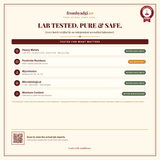
Heavy metals
✓ PASS

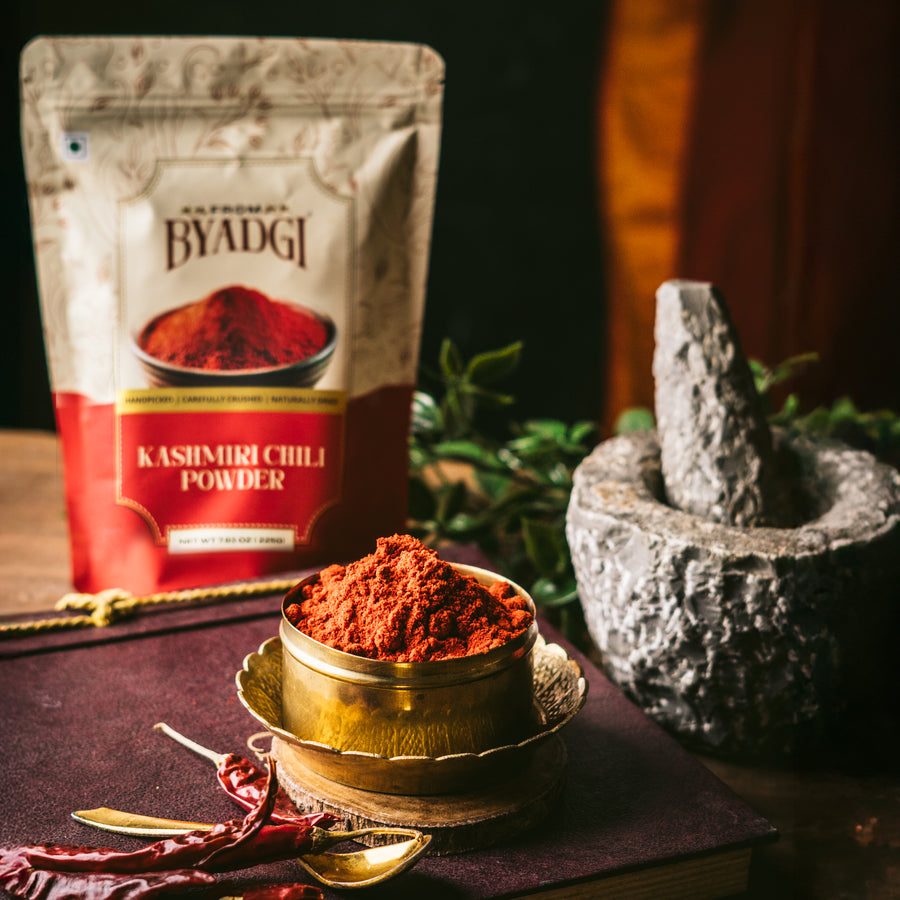



Also known as deggi mirch / Kashmiri mirch — the mild, color-rich chili behind tandoori's red glow
Vibrant bright red with gentle warmth. The butter chicken chili.
 Third-party lab tested · every batch✓ Same-day shipping on orders by 2 pm PT (Mon–Fri)✓ Free U.S. shipping over $36✓ 30-day money-back guarantee✓ Non-GMO Project Verified
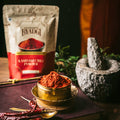
Gentle warmth with a bright, natural red (ASTA 134). A small step up from Byadgi, and nowhere near cayenne.
Our values: lab tests, November 2025. Paprika, jalapeño and cayenne are typical ranges.
Batch KS004 · Report BARC-26-09-11067 · Tested September 2026
FSSR 2011 and US FDA limits. ✓ PASS means the result is within the safe limit. Exact numbers are in the full report.
Read the full report (PDF) →
Bloom 1–2 tsp in warm oil or ghee at the start for a glossy, bright red gravy: butter chicken, paneer, rogan josh.
Stir into yogurt with ginger-garlic paste and lemon. You get the restaurant red glow without food coloring.
1 whole dried Kashmiri chili ≈ ¾–1 tsp powder. For 4–5 whole chilies, start with about 1 tbsp and adjust.
Most "Kashmiri chili powder" in the US is regular chili with red dye, stale, and untested. Here's how we're different.
| From Byadgi | Typical "Kashmiri" powder | |
|---|---|---|
| Color source | Natural crimson from sun-dried Kashmiri chilies — 0 dyes | Often regular chili with red dye added — check the label |
| Freshness | Manufacturing date printed on every pouch | Usually only a best-by date |
| Cost | $10.67 per 100 g at regular price, for tested, traceable chili | Often cheaper per ounce, but with no testing or source shown |
| Lab testing | 105 tests per batch: pesticides, heavy metals, salmonella, E. coli | Results rarely shared |
| Heat & color | 14,070 SHU · ASTA 134, measured by a lab and published | Usually just "mild" on the label |
| Full transparency | Batch number, manufacturing date and lab report (QR code) on every pouch, from a family 40 years in the trade | Little beyond the label; often unclear who made it or where |
Hi this is shwetha …Very impressed with the quality of this Kashmiri red chilli powder. It has a rich natural color, a pleasant aroma, and enhances the taste of every dish. It adds the perfect vibrant look without excessive heat. Definitely one of the best product I’ve used and it’s highly recommended 🙌
Loved the vibrant color and freshness of this Kashmiri Red Chili Powder. It adds a beautiful natural red hue without overwhelming heat—perfect for everyday Indian cooking!
It is one of the best i found❤️
I am in love with Byadgi spices by now especially this Kashmiri red chili powder. The color it gave to curry with the least spicy flavor was a game changer for me. I have used so many spices but this one is definitely on top of my list.
The color on this Kashmiri chili powder is stunning! It adds that rich, vibrant red hue to my dishes without overpowering them with heat, which makes it so versatile for daily cooking. Fresh, fragrant, and a permanent staple in my spice rack now.
Yes. Deggi mirch (also called Kashmiri mirch) is the name many recipes use for Kashmiri chili powder — mild heat, vivid red color. If your recipe says deggi mirch, this is exactly it.
One ingredient: sun-dried Kashmiri chili — naturally vegan, gluten-free, salt-free, MSG-free, keto- and Whole30-friendly.
Bulk bags are untested and undated — you can't verify purity, age, or color. Every From Byadgi pouch carries a published 105-parameter lab report and its manufacturing date, backed by a 30-day money-back guarantee from a family you can reach.
Most "Kashmiri chili powder" at the Indian store isn't real Kashmiri chili — it's regular chili with red dye added. Check the ingredients. Ours is 100% pure sun-dried Kashmiri chili with zero dyes or fillers.
Our 225g pouch is 4–5× bigger than what boutique spice brands sell. At $10.67 per 100g, you're paying less than half what they charge — for the real thing.
We're a family from Byadgi, Karnataka — with over 40 years in the spice business. Three retail shops, a wholesale network, and end-to-end control from sourcing to delivery. Every batch is hand-selected, third-party lab tested, and Non-GMO verified.
Kashmiri chilies are prized for their vibrant crimson color and mild heat — they give dishes like tandoori, butter chicken, and rogan josh their signature look without overwhelming spiciness. Regular chili powder is hotter but lacks the color depth. Many brands fake this by adding red dye to regular chili and calling it "Kashmiri." Ours is pure, sun-dried Kashmiri chili — the color is natural.
Keep in the original sealed pouch or transfer to an airtight container. Store in a cool, dark place — not above your stove. Always use a dry spoon. Best within 12 months of the manufacturing date printed on the pouch for the brightest color and aroma. Stored well, it keeps its color nicely beyond that, and many of our customers use it longer.
Free shipping on all U.S. orders over $36. Orders placed by 2 pm PT (Mon–Fri) ship the same day, with full tracking.
Yes — this is exactly what Kashmiri chili is made for. It gives tandoori chicken, biryani, kebabs, and curries that brilliant red color naturally, without food coloring. It's also perfect for butter chicken, paneer tikka, rogan josh, and korma.
Real Kashmiri chili is gentle — it's prized for vivid color and flavor, not heat. Ours tested at 14,070 SHU: warmer than Byadgi (our mildest) but far below cayenne, and you use it by the teaspoon. If you've had "Kashmiri chili" that was very hot, it likely wasn't real Kashmiri — it was regular chili dyed red and mislabeled.
A good rule of thumb: 1 whole dried Kashmiri chili equals roughly ¾ to 1 teaspoon of Kashmiri chili powder. If your recipe calls for 4–5 whole Kashmiri chilies, start with about 1 tablespoon of powder and adjust to taste. The color and flavor translate well — you won't miss the whole chilies.
Honestly — nothing matches real Kashmiri chili exactly. Paprika gives color but lacks the flavor depth. Regular chili powder adds heat but not the vibrant crimson. Some people mix paprika with a pinch of cayenne, but it's a compromise. If your recipe specifically calls for Kashmiri chili, there's no true substitute — which is exactly why we made this available.
Byadgi is our mildest chili (11,263 SHU) with the deepest red (ASTA 142) — the classic for South Indian cooking like sambhar and rasam. Kashmiri is a brighter red with a little more warmth (14,070 SHU, ASTA 134) — perfect for tandoori, butter chicken, and dishes where a vivid red matters. Regular chili powder (American-style) is usually a blend of multiple spices including cumin, garlic, and oregano — a completely different product.
That's a sign of either artificial dyes, fillers, or stale product. Real, pure Kashmiri chili has a sweet, fruity, mildly smoky flavor — never bitter or sour. If you've experienced that off-taste, what you had wasn't genuine Kashmiri chili. Our powder is third-party lab tested with zero additives — just pure sun-dried chili.
You're covered by our 30-day money-back guarantee. If the spices don't meet your expectations or arrive damaged, email us and we'll refund or replace them. We're a family business — your trust means everything to us.
Kashmiri chili powder is a mild Indian red chili powder made from ground Kashmiri chilis, prized for its vibrant natural red color more than its heat. It is also called Kashmiri mirch, Kashmiri red chili powder, or deggi mirch - all the same spice. It is the classic chili for tandoori marinades, butter chicken, and rogan josh.
Mild and slightly sweet with an earthy, gently smoky warmth - flavor first, heat second. That is why restaurant kitchens use it for signature red curries: big color and rounded chili flavor without overpowering spice.
In ours, exactly one ingredient: ground Kashmiri chilis. Nothing else. Cheaper powders often hide red dye, brick powder, or filler flours - which is why every batch of ours is lab-tested across 105 parameters, with zero dyes and zero fillers.
Deggi mirch (also written degi mirch) is simply called Kashmiri chili powder in English - a mild, bright-red chili powder. Some Indian brands blend in hotter chilis, but ours is 100% Kashmiri.
Byadgi chili powder comes from Byadgi, a town in Karnataka, India famous for its deep-red, wrinkled chilis. It's our mildest chili, with an even deeper red than Kashmiri and a little less warmth — our home region's signature chili, and the town our family has traded in for over 40 years.