

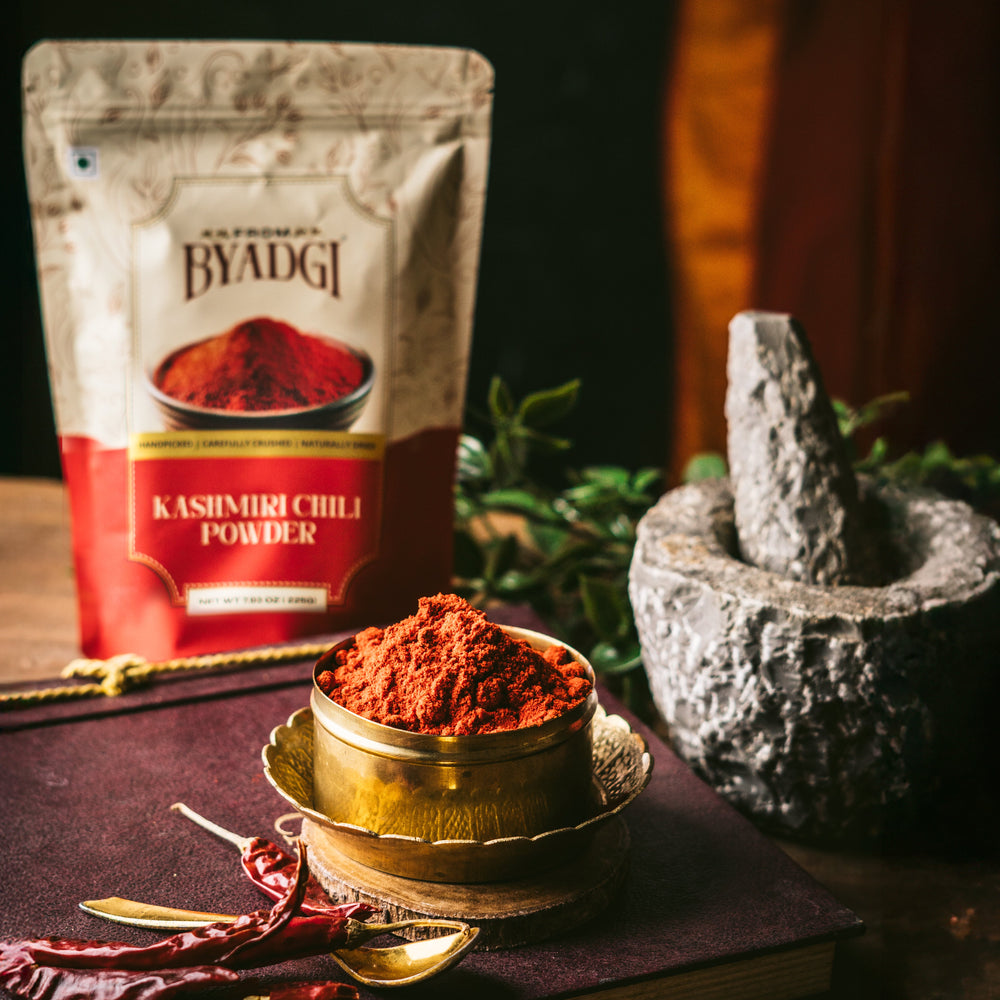
Which is hotter? Reference guides usually say Byadgi is hotter (about 5,000 to 15,000 SHU, vs 1,000 to 2,000 SHU for Kashmiri). Our lab-tested batches measured the opposite: Kashmiri 14,070 SHU, Byadgi 11,263 SHU. Heat varies by farm and batch, which is why we test every batch and publish the numbers.
Quick answer: Both are gentle, bright-red Indian chilies famous for color. Byadgi (also called dabbi in Karnataka) is the slightly milder, slightly sweeter everyday chili, with the deeper red (ASTA 142). Kashmiri is the restaurant-red specialist, with a little more warmth and an exceptional ASTA 134 color value. For gentle everyday curries, grab Byadgi. For glowing red gravies and marinades, grab Kashmiri. Or do what restaurants do: blend them.
What Is Byadgi Chili Powder?
Byadgi chili comes from the town of Byadgi in southern India — a town so famous for this chili that the chili took its name. (Our founder's family has traded spices there for 40 years — it's literally where From Byadgi comes from.)
It's prized for deep red color without aggressive heat and a gentle, slightly sweet flavor — which is why it's the backbone of everyday South Indian cooking: sambar, dal tadka, chutneys, and masala pastes.
What Is Kashmiri Chili Powder?
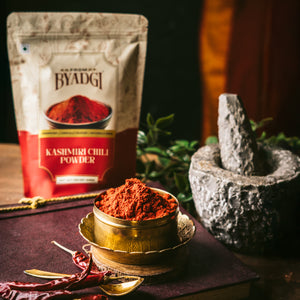
Kashmiri chili (also called degi mirch) is the variety behind the glowing red curries in restaurant photos — the traditional choice for tandoori marinades, butter chicken, and rogan josh. Our batch lab-tests at ASTA 134 color value; most generic chili powders sit near 50–70.
The Spice Trade's Open Secret
Most brands won't tell you this: much of the "Kashmiri chili powder" sold today is actually Byadgi chili — the pods Karnataka traders call dabbi. True Kashmir-grown supply is small, so the market quietly fills the gap with Byadgi-family chilies.
Does it matter? Only if you shop by name. Names are loose in this trade — which is why we don't ask you to trust names. We publish lab numbers per batch, so a pouch from us tells you its exact heat and color. No disguise, no guessing.
"The so-called 'Kashmiri chilli' is usually 100% Byadgi or at least a blend of it."
— ranveerbrar.com, after a chef's visit to Byadgi town
Head-to-Head
| Byadgi (Dabbi) | Kashmiri (Degi Mirch) | |
|---|---|---|
| Heat (lab) | 11,263 SHU — gentle | 14,070 SHU — gentle-medium |
| Color (lab) | ASTA 142 — deep red | ASTA 134 — exceptional bright red |
| Flavor | Slightly sweet, earthy | Fruity, bright |
| Signature dishes | Sambar, dal tadka, chutneys, fish curry | Butter chicken, tikka, rogan josh, pav bhaji |
| Price | $24 / 8oz | $24 / 8oz |
🍳 Cooking With Them: The 10-Second Rule
Both chilies burn fast — burned chili powder turns bitter and loses its red color. The technique that matters most:
Bloom, don't fry. Add the powder to warm (not smoking) oil or ghee, stir 10–15 seconds until it releases its color into the fat, then immediately add onions, tomatoes, or liquid. That's how restaurants get gravy that's red through and through instead of speckled.
5 Dishes Where Kashmiri Wins
- Butter chicken — the red-orange glow is Kashmiri. 1 tablespoon per 500g chicken in the marinade.
- Tandoori / tikka marinades — color that survives high heat without chile-burn.
- Rogan josh — 2 teaspoons bloomed in ghee before the meat goes in.
- Pav bhaji — the street-food red. 1 tablespoon per 4 servings, bloomed in butter.
- Red chutneys & raita swirl — a pinch bloomed, then cooled, keeps color vivid.
Want full recipes? See: How to Use Kashmiri Chili Powder — 5 Dishes That Get Their Red Color From It.
5 Dishes Where Byadgi Wins
- Sambar — the classic. Byadgi's sweetness melts into tamarind and dal. 2 teaspoons per pot.
- Everyday dal tadka — 1 teaspoon bloomed in ghee with cumin and garlic, poured over hot dal.
- Vegetable curries & poriyal — gentle warmth kids can eat.
- Fish curry — coastal-style: Byadgi + coconut milk + kokum.
- Masala pastes & podis — its oils grind beautifully into wet pastes and gunpowder-style chutney powders.
The Restaurant Trick: Blend Them
Restaurants rarely use one chili — they split the jobs: Kashmiri for color, another chili for kick. Try:
- 2 parts Kashmiri + 1 part Byadgi → bright red, sweet depth, family-friendly heat
- Add a pinch of our Indian Red Chili Powder (29,449 SHU) when you want the same color with real fire
With both pouches on your shelf, you control color and heat separately — like a restaurant kitchen does.
3 Quick Recipes to Start Tonight
🍗 Restaurant-Red Tikka Marinade (serves 4)
1 cup thick yogurt · 1 tbsp Kashmiri chili · 1 tbsp ginger-garlic paste · 1 tsp salt · squeeze of lemon. Marinate chicken 4+ hours. Grill or roast at 220°C until charred at the edges.
🥣 5-Minute Dal Tadka (serves 4)
Heat 2 tbsp ghee → 1 tsp cumin seeds → 2 crushed garlic cloves → off the heat, 1 tsp Byadgi chili (10 seconds) → pour over 3 cups cooked dal. Salt, lemon, coriander.
🔴 2-Minute Red Finishing Oil (keeps 2 weeks)
Warm ¼ cup oil (not smoking) → 2 tsp Kashmiri chili → swirl 15 seconds → cool. Drizzle over raita, khichdi, eggs, pizza — instant color and gentle warmth.
Can You Substitute One for the Other?
Yes — 1:1 by volume in almost any recipe. With our current batches, expect slightly more heat from Kashmiri (14,070 vs 11,263 SHU) and slightly sweeter depth from Byadgi. (More options: Kashmiri Chili Powder Substitutes — Exact Ratios.)
FAQ
Which is hotter, Byadgi or Kashmiri chili powder?
Reference guides usually rate Byadgi hotter (about 5,000 to 15,000 SHU vs 1,000 to 2,000 SHU for Kashmiri). Our lab-tested batches measured the opposite: Kashmiri 14,070 SHU and Byadgi 11,263 SHU. Both are gentle compared with cayenne (30,000 to 50,000 SHU). Heat varies by farm and batch, so check the batch lab report.
Is Kashmiri chili powder the same as Byadgi?
Cousin varieties — and in today's market, often literally the same chili: most "Kashmiri" powder is actually Byadgi (dabbi) under a Kashmiri label. Buy by lab numbers, not names.
Which is better for butter chicken?
Kashmiri — the ASTA 134 color makes the sauce glow without making it too spicy.
How hot are they vs cayenne?
Far milder — cayenne runs 30,000–50,000 SHU, roughly 2–4× hotter.
How should I store them?
Airtight, away from light. Use within 6 months of milling — color fades first, flavor follows. (Our pouches print the milled date.)
The bottom line: you can't lose. Both are single-ingredient, lab-tested, freshly milled, and ship free over $36. Gentle everyday cooking → Byadgi. Chasing restaurant red → Kashmiri. Cook a lot → both, and blend like the pros.
 How to Check if Indian Spices Are Pure: Home Tests vs Lab Tests
 Paprika vs Chili Powder: The Real Difference and Best Swap
 Bestseller
 Ships free
 Gift set