

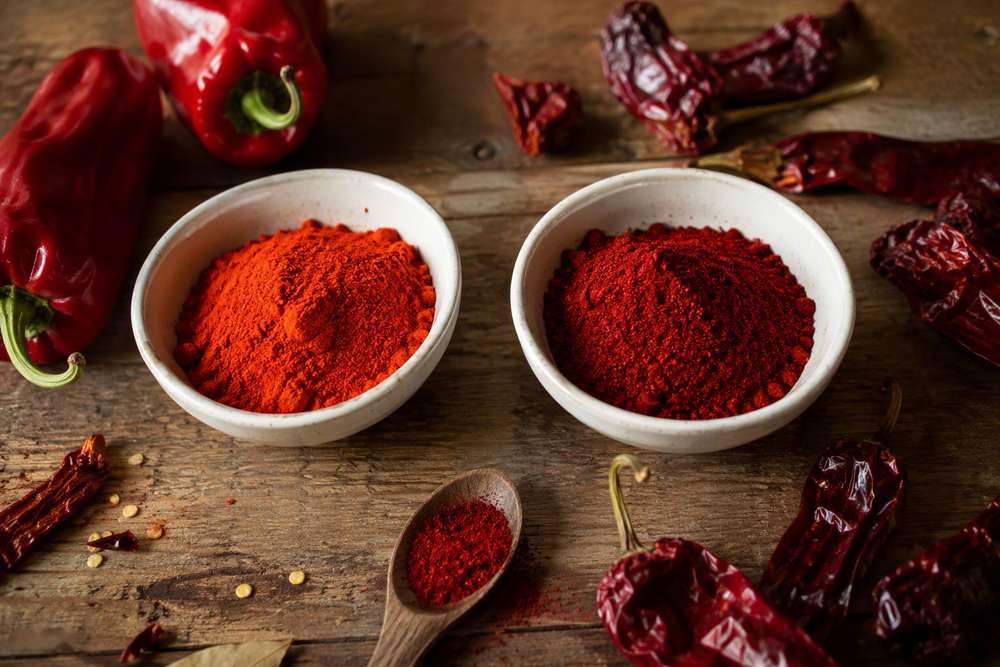
Quick answer: paprika and chili powder are both ground dried red peppers, but paprika is milder, sweeter and usually made from specific sweet pepper varieties, while chili powder is made from hotter chilies and brings real heat. If you need a paprika substitute for color, the best swap is Kashmiri chili powder: it gives the same vivid red with gentle warmth. From Byadgi's single-origin Kashmiri is lab tested and one ingredient only, which is exactly what a paprika swap should be.
They sit side by side in every spice rack, they look almost identical in the jar, and recipes treat them like distant cousins. Here is the real difference, when you can swap them, and when only the genuine article works.
What is paprika, exactly?
Paprika is ground dried red peppers, almost always sweet Capsicum annuum varieties. It is the national spice of Hungary and a backbone of Spanish cooking. Three main types show up in US stores:
- Sweet paprika: the default. Mild, sweet, bright red. This is what a recipe means when it just says "paprika."
- Smoked paprika (pimenton): Spanish-style, dried over oak fires. Deep smoky flavor, same gentle heat.
- Hot paprika: made with some hotter peppers in the blend. Warm, but still gentler than most chili powders.
Heat-wise, sweet paprika barely registers, roughly 250 to 1,000 Scoville units. Its job in a dish is color and sweet pepper flavor, not fire.
And what is chili powder?
Two very different products share this name, and knowing which one your recipe means matters more than the paprika question:
- American chili powder is usually a blend: ground chilies plus cumin, garlic, oregano and sometimes salt, built for chili con carne. It is a seasoning mix, not a single spice.
- Indian chili powder is one ingredient, ground dried chilies, and it runs much hotter. Kashmiri chili powder is the deep-red, color-first member of this family (our single-origin batch lab-tests at a medium 14,070 SHU); standard Indian red chili powder (lal mirch) is the fiery one.
So "paprika vs chili powder" has two answers. Against the American blend, paprika is purer and simpler. Against Indian chili powder, paprika is the milder, sweeter, less vivid option.
Paprika vs chili powder: the quick table
| Sweet paprika | Kashmiri chili powder | Indian red chili powder | American chili blend | |
|---|---|---|---|---|
| Made from | Sweet red peppers | Kashmiri chilies | Hot Indian red chilies | Chilies + cumin, garlic, oregano |
| Heat | Very mild (~250-1,000 SHU) | Medium (variety is famously mild; our batch lab-tests 14,070 SHU) | Hot | Mild-medium |
| Color payoff | Bright red-orange | Deep vivid red | Deep red | Muted red-brown |
| Flavor | Sweet pepper | Fruity, slightly smoky | Sharp, fiery | Savory blend |
| Signature dishes | Goulash, deviled eggs, rubs | Butter chicken, tikka masala, rogan josh | Everyday Indian curries | Chili con carne, tacos |
Can you substitute paprika for chili powder?
Yes, with two warnings. Paprika gives you the red color and sweet pepper base, but it brings almost no heat, and if your recipe means the American blend, paprika also misses the cumin, garlic and oregano notes. For color-focused dishes (rubs, roasted potatoes, creamy sauces, deviled eggs), paprika works fine 1:1 against a mild chili powder.
The better question is usually the reverse: what do you use when a recipe wants paprika's color and you want more flavor than paprika delivers? That is where Kashmiri shines.
Why Kashmiri is the paprika upgrade chefs reach for
Kashmiri chili powder does paprika's job (vivid red color) and then goes one step further: a deeper red payoff and a fruity, restaurant-style chili flavor that paprika cannot match, with a medium warmth paprika never had (our batch lab-tests at 14,070 SHU versus a few hundred for sweet paprika). It is the chili behind the glowing red gravy in butter chicken and tikka masala. Used as a paprika substitute, start with the same amount for color, taste, then adjust: expect more warmth than paprika, because lab-tested Kashmiri runs medium, not mild. Bloom it in warm oil or ghee for 5 to 10 seconds to unlock the full red.
Our From Byadgi Kashmiri chili powder is single-origin, one ingredient, and third-party lab tested, so the swap stays clean: no blends, no fillers, nothing but Kashmiri chilies. If a recipe actually wants fire, step up to our Indian red chili powder, and for the deepest red of all, Byadgi chili powder at about half the quantity. More swaps are ranked in the Kashmiri substitutes guide.
When only paprika works
Keep real paprika on hand for two situations: Hungarian and Spanish recipes where paprika is the flavor backbone (goulash, chicken paprikash, patatas bravas), and anything that specifically calls for smoked paprika, because that oak-smoke note has no Indian equivalent. For everything else, especially color-first cooking, Kashmiri is the stronger play.
FAQ: paprika and chili powder
Is paprika the same as chili powder?
No. Paprika is ground sweet red peppers with very little heat. Chili powder is either a hotter single-ingredient ground chili (Indian style) or a seasoned blend with cumin and garlic (American style). They share color, not heat.
What is the best substitute for paprika?
Kashmiri chili powder. It matches paprika's vivid red color with a deeper flavor payoff (at a medium 14,070 SHU ours brings more warmth than sweet paprika, so taste as you go). Use it 1:1 for color in most dishes, like our single-origin Kashmiri.
Can I use chili powder instead of paprika?
Yes for color in cooked dishes, but expect more heat and, if you use the American blend, extra cumin and garlic flavors your recipe did not ask for. Kashmiri chili powder is the safer swap because it stays mild.
Is smoked paprika the same as regular paprika?
Same pepper family, different process. Smoked paprika is dried over oak fires, which adds a strong smoky flavor. Kashmiri has a naturally gentle fruitiness with a light smoky note, but it is not a 1:1 flavor match for smoked paprika in Spanish dishes.
Which is better for color, paprika or Kashmiri?
Kashmiri. It delivers a deeper, more vivid red at the same spoon-for-spoon amount, which is why Indian restaurant kitchens use it for the famous red curries. Paprika gives a brighter but lighter orange-red.
 Kashmiri vs New Mexico vs Ancho: Which Red Chile Powder
 Kashmiri Mirch, Degi Mirch, Cashmere Chili: Same Thing?
 Kashmiri Chili Powder Substitute: 5 Best Swaps, Exact Ratios