

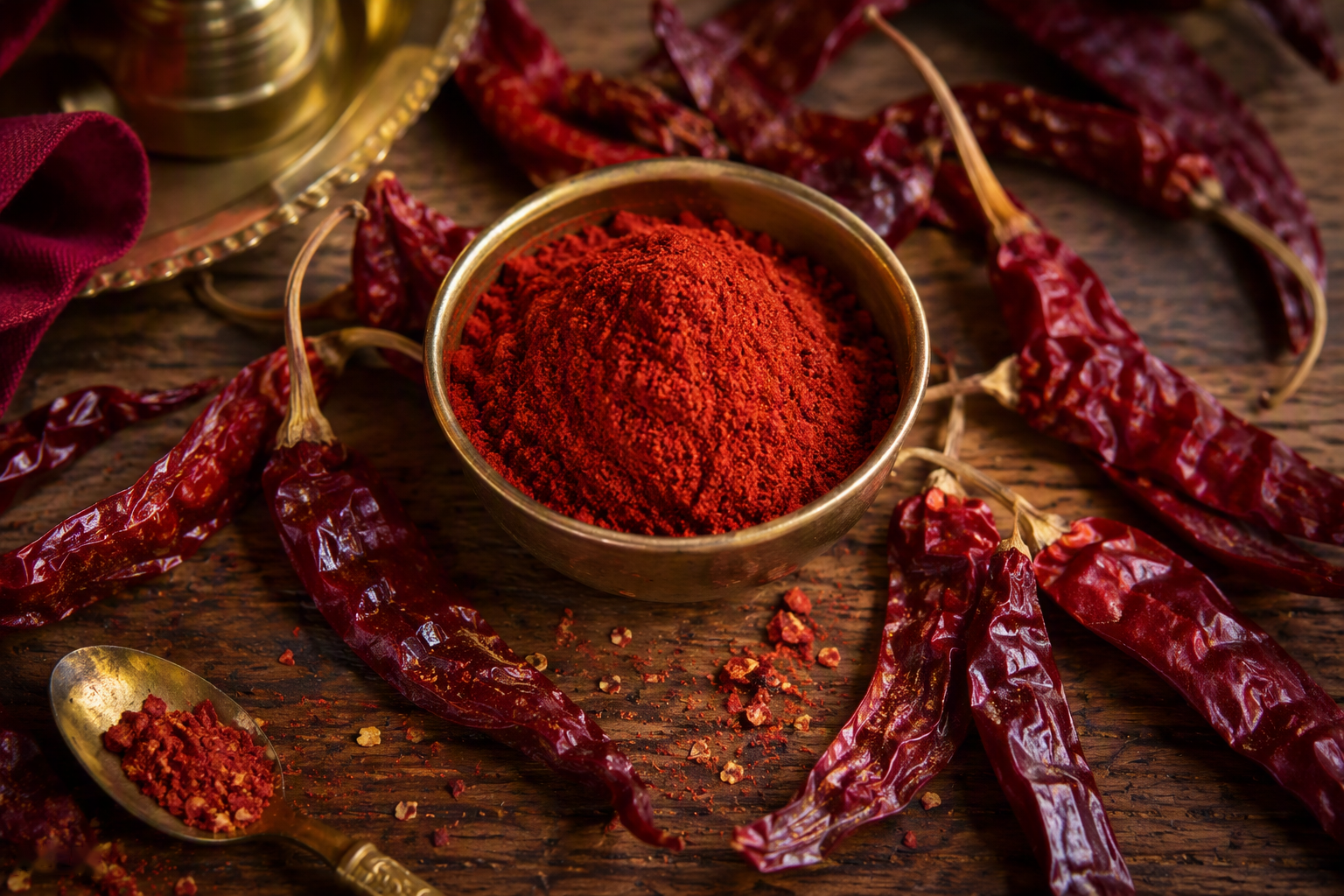
Quick answer: yes and no. "Kashmiri mirch" and "cashmere chili" both mean Kashmiri chili, the mild, deep-red chili from Kashmir, just said in Hindi and in American spelling. "Lal mirch" is different: it is the generic Hindi name for red chili powder, which is usually hotter than Kashmiri and is not always the same chili. From Byadgi sells both types as separate single-origin powders, so here is the full map of every confusing name you will meet, and which pouch each one points to.
If you have ever stood in the spice aisle (or stared at a recipe) wondering whether kashmiri mirch, cashmere chili, lal mirch, chile and chilli are four different spices, you are not alone. US searches for these name variants add up to thousands every month. The short version: there are fewer actual chilies here than there are spellings.
Kashmiri mirch and cashmere chili: same chili, two accents
Kashmiri mirch is simply Kashmiri chili said in Hindi. "Mirch" means chili or pepper in Hindi, so kashmiri mirch is "the chili from Kashmir." Same plant, same powder, nothing new to learn.
Cashmere chili is the American way of saying and spelling the same word. Kashmir is a region in northern India (also famous for cashmere wool), and American English happily borrows the wool spelling for the chili. If a recipe, a YouTube video, or a grocery app says cashmere chili powder, it means Kashmiri chili powder. Our From Byadgi Kashmiri chili powder is exactly that: single-origin Kashmiri chilies, lab tested, nothing blended in.
What makes this chili worth three names? Color and gentleness. Generic Kashmiri is famous for being mild, but lab values vary by farm and batch: our single-origin batch tests at a solid medium 14,070 SHU (published on our lab results page). Either way, its superpower is the vivid red it gives food, which is why restaurant butter chicken and tikka masala glow red-orange.
Lal mirch: the one that is actually different
Lal mirch (also written laal mirch or lal mirchi) literally means "red chili" in Hindi. It is a category, not a variety. On Indian grocery shelves in the US, lal mirch powder is the everyday hot red chili powder used in home cooking, usually ground from hotter Indian red chilies and noticeably spicier than Kashmiri.
So if a recipe says lal mirch and you use Kashmiri, the dish will come out milder than intended (though beautifully red). And if a recipe says Kashmiri and you use a hot lal mirch powder at the same quantity, you will get more heat than the cook planned. They are cousins, not twins. Our From Byadgi Indian red chili powder is the lal mirch slot: bold, fiery, deep in color, for spice lovers.
Chile, chili, or chilli: one word, three passports
This one is pure spelling geography:
- Chile — Spanish spelling, standard in Mexico and the US Southwest ("New Mexico chile," "chile powder").
- Chili — standard American spelling ("chili powder," "chili con carne").
- Chilli — British spelling, also used across India, the UK and most of the Commonwealth ("Kashmiri chilli").
All three point at the same plant family, Capsicum annuum and friends. One caution for American shoppers: in the US, "chili powder" without a chili name in front of it often means the Tex-Mex blend (ground chilies plus cumin, garlic and oregano) used for chili con carne. Indian chili powders, including Kashmiri and lal mirch, are single-ingredient ground chilies. If a recipe from an Indian source says "chili powder," it means the pure kind. You can read more about that blend-versus-pure split in our Kashmiri substitutes guide.
The quick name map
| Name you saw | What it actually is | Heat level | Which pouch |
|---|---|---|---|
| Kashmiri chili / Kashmiri chilli | Mild deep-red chili from Kashmir | Medium (ours lab-tests 14,070 SHU) | Kashmiri chili powder |
| Kashmiri mirch | Same thing, Hindi name | Medium (ours lab-tests 14,070 SHU) | Kashmiri chili powder |
| Cashmere chili | Same thing, American spelling | Medium (ours lab-tests 14,070 SHU) | Kashmiri chili powder |
| Lal mirch / laal mirch | Generic hot Indian red chili powder | Hot | Indian red chili powder |
| Chile powder (New Mexico, ancho) | US Southwest / Mexican chilies | Varies by variety | Different cuisine entirely |
| Chili powder (no chili named) | Often the Tex-Mex blend in the US | Mild-medium | Check the ingredient list |
| Byadgi chilli | Karnataka's deep-red variety, similar heat to Kashmiri, deeper stain | Medium (lab-tested 11,263 SHU) | Byadgi chili powder |
And where does Byadgi fit in?
Since you are here: Byadgi is the other famous deep-red Indian chili, grown in and around the town of Byadgi in Karnataka. Our lab tests put this batch of Byadgi at 11,263 SHU, right next to our Kashmiri at 14,070, so heat-wise they are close cousins. The real difference is color: Byadgi stains an even deeper red (ASTA 142 versus Kashmiri's 134). You can use it in Kashmiri recipes at the same amount, bloomed off-heat for 5 to 10 seconds, and expect a deeper red. The full side-by-side is in our Byadgi vs Kashmiri guide.
FAQ: chili names, answered
Is kashmiri mirch the same as Kashmiri chili powder?
Yes. "Mirch" is Hindi for chili, so kashmiri mirch is just Kashmiri chili said in Hindi. Same chili, same powder.
Is cashmere chili the same as Kashmiri chili?
Yes. Cashmere is the common American spelling and pronunciation of Kashmiri. If a recipe or store says cashmere chili powder, it means Kashmiri chili powder, like our single-origin Kashmiri.
Is lal mirch the same as Kashmiri?
No. Lal mirch means generic red chili in Hindi and usually refers to a hotter everyday Indian chili powder. Kashmiri is a specific mild, deep-red variety. They are not interchangeable spoon-for-spoon.
What is the difference between chile, chili and chilli?
Only spelling. Chile is Spanish and US Southwest usage, chili is American English, chilli is British and Indian English. Same plant family either way.
Is US chili powder the same as Indian chili powder?
Usually not. American "chili powder" is often a blend of ground chilies with cumin, garlic and oregano for chili con carne. Indian chili powder is one ingredient: ground chilies. Check the label before swapping one for the other.

