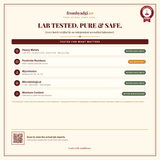
Heavy metals
✓ PASS

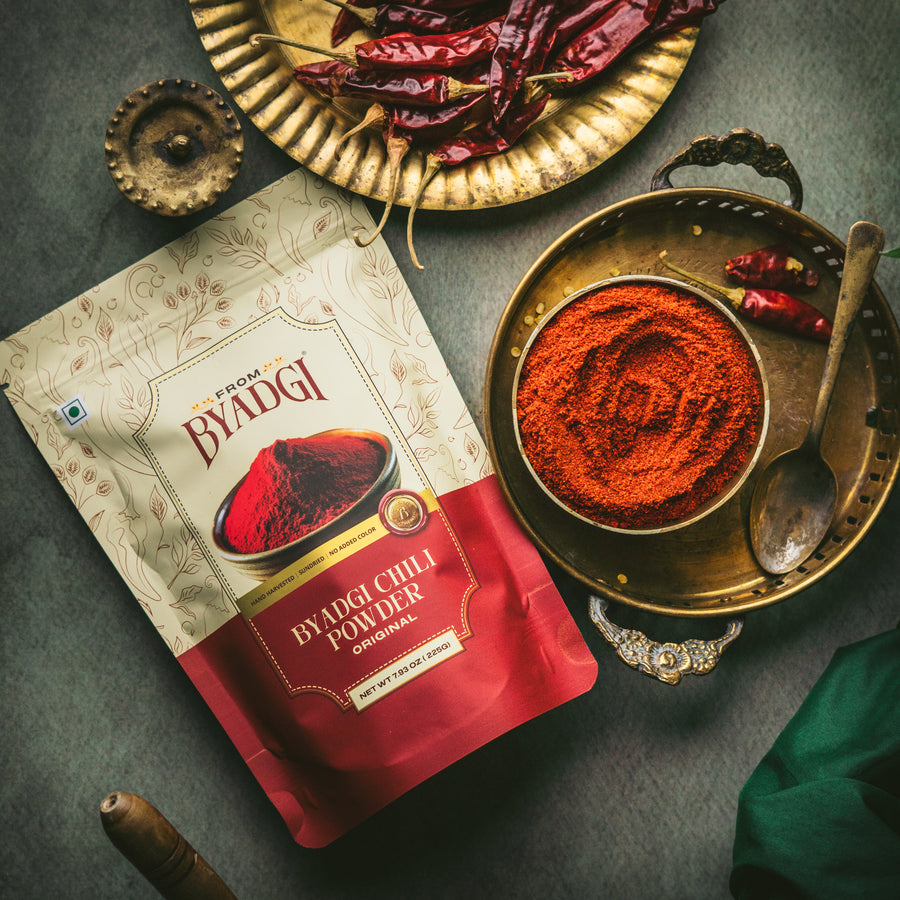
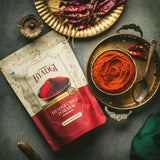
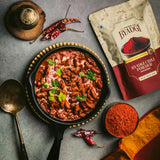


GI-certified deep red colour. Smoky sweetness, mild heat.
 Third-party lab tested · every batch✓ Same-day shipping on orders by 2 pm PT (Mon–Fri)✓ Free U.S. shipping over $36✓ 30-day money-back guarantee✓ Non-GMO Project Verified
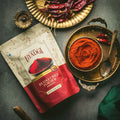
The mildest chili we sell, with the most color (ASTA 142). Its real job is a deep red curry, not fire.
Our values: lab tests, November 2025. Paprika, jalapeño and cayenne are typical ranges.
Batch BY004 · Report BARC-26-09-11064 · Tested September 2026
FSSR 2011 and US FDA limits. ✓ PASS means the result is within the safe limit. Exact numbers are in the full report.
Read the full report (PDF) →
Bloom 1–2 tsp in warm oil or ghee for a deep red base: rajma, sambar, biryani.
Same color, more warmth. Start with half the paprika amount, then add to taste.
Mix with yogurt, lemon and salt for a bright red marinade that won't overpower.
Most "Byadgi chili" sold in the US is blended, stale, and untested. Here's how we're different.
| From Byadgi | Typical grocery chili powder | |
|---|---|---|
| Freshness | Manufacturing date printed on every pouch | Usually only a best-by date |
| Cost | $10.67 per 100 g at regular price, for tested, traceable chili | Often cheaper per ounce, but with no testing or source shown |
| Lab testing | 105 tests per batch: pesticides, heavy metals, salmonella, E. coli | Results rarely shared |
| ASTA color | 142, measured by a lab and published | Rarely measured or shared |
| SHU heat | 11,263, measured by a lab and published | Usually just "mild" or "hot" on the label |
| Full transparency | Batch number, manufacturing date and lab report (QR code) on every pouch, from a family 40 years in the trade | Little beyond the label; often unclear who made it or where |
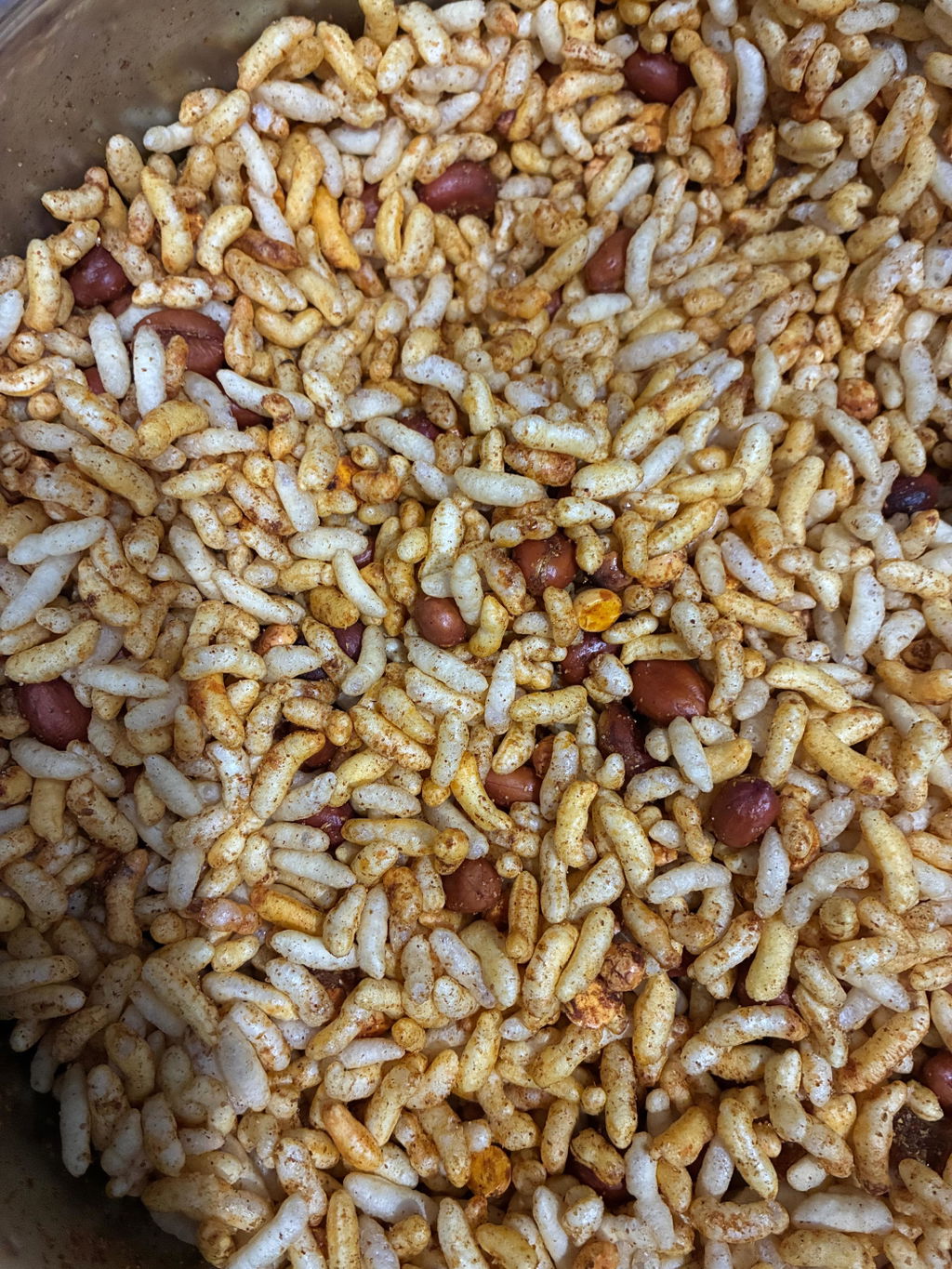
I tried the chili powder, and I could sense its freshness the moment I opened the pack. I added it to masala puffed rice, and the difference in taste was obvious. The spice lingered on my tongue for a while. I love this product!
I absolutely love cooking with @bydagi dry spices! The quality, freshness, aroma, and beautiful natural flavors really stand out in my cooking. Every spice adds so much depth and authentic flavor to my dishes.
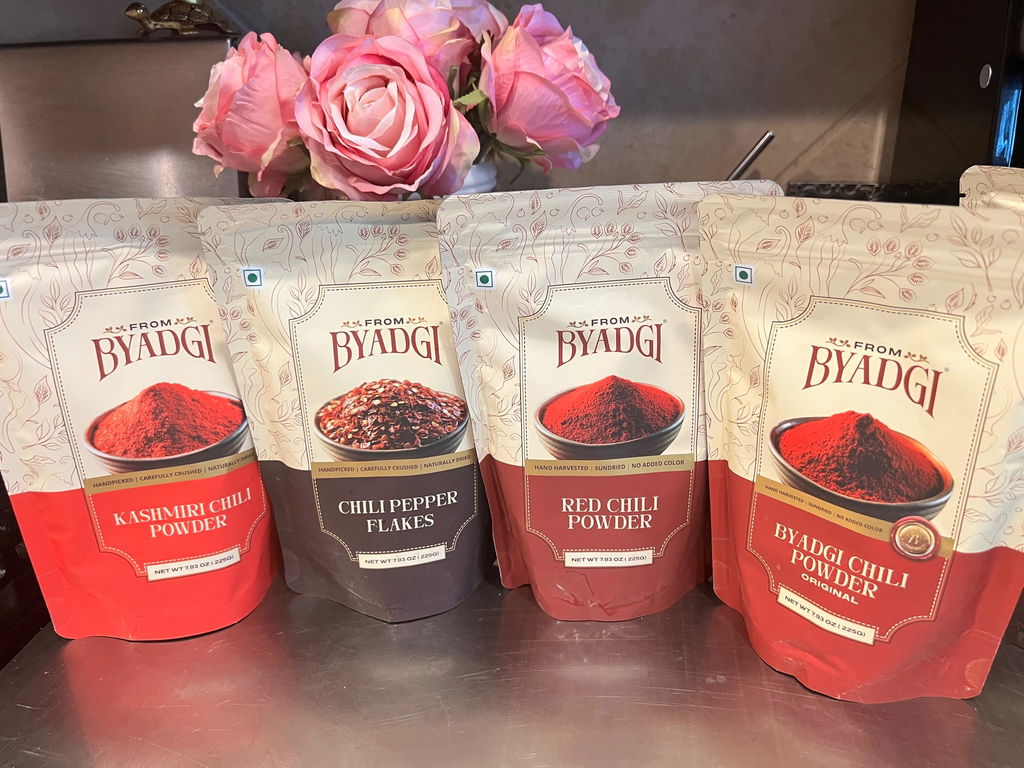
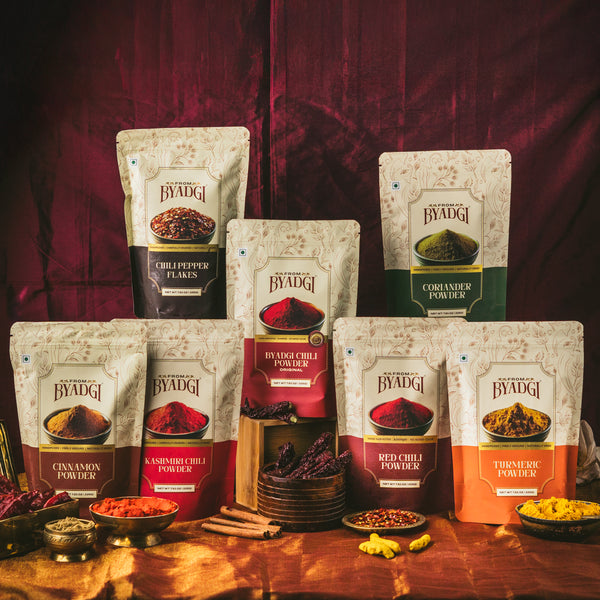
I’ve been using their cumin seeds, black pepper, cloves, Kashmiri mirch, red chili powder, cinnamon powder, cumin powder, and turmeric powder, and I’m so impressed with the rich aroma and vibrant flavors. ❤️
These spices are perfect for everyday Indian cooking—from sabzis and dals to curries, marinades, and masalas. They make homemade food taste so much more flavorful and authentic.
Highly recommend @bydagi to anyone who loves cooking with fresh, flavorful, high-quality Indian spices! 🌶️✨
The spices have an authentic aroma to it. The packaging is great with resealable lock for each spice. I can use this spices without worrying about adulteration.
Every Byadgi chilli powder was top quality and genuinely elevated my cooking experience❤️
As a food creator, I am super picky about my chilies, and this Byadgi Chili Powder is an absolute standout. It gives curries that gorgeous, vibrant red color without making them overwhelmingly spicy. The depth of flavor and rich aroma take home-cooked meals straight to restaurant quality!
We get it — the Indian grocery store is familiar and cheap. But most of what's sold there is multi-region blends that have been sitting in warehouses for months, with no purity testing and often mixed with fillers.
Our 225g pouch is 4–5× bigger than what boutique spice brands sell. At $10.67 per 100g, you're paying less than half what they charge — and you're getting real, single-origin Byadgi chili packed at a certified facility in India. The difference hits you the moment you open the pouch.
We're a family from Byadgi, Karnataka — with over 40 years in the spice business. Three retail shops, a wholesale network, and end-to-end control from sourcing to delivery. Every batch is single-origin, hand-selected, third-party lab tested, and Non-GMO verified.
Keep in the original sealed pouch or transfer to an airtight container. Store in a cool, dark place — not above your stove. Always use a dry spoon. Best within 12 months of the manufacturing date printed on the pouch for the brightest color and aroma. Stored well, it keeps its color nicely beyond that, and many of our customers use it longer.
Free shipping on all U.S. orders over $36. Orders placed by 2 pm PT (Mon–Fri) ship the same day, with full tracking.
No. American-style chili powder is a seasoning blend — it contains cumin, garlic, oregano, and other spices mixed in. From Byadgi is 100% pure ground Byadgi chili. One ingredient. If your recipe calls for "chili powder" for a Tex-Mex dish, that's a different product. If you're making biryani, sambhar, curry, or any dish that needs deep red colour and smoky warmth — this is what you want.
Byadgi chili is often compared to paprika — both are prized for colour over heat. But Byadgi has a deeper, smokier warmth and a richer red that paprika can't match. Think of it as India's answer to paprika, but with more depth and complexity. Using it in place of paprika? Start with half the amount, then add to taste.
It depends. If the recipe is Indian, Southeast Asian, or Middle Eastern — yes, this is exactly what it's calling for. If it's a Tex-Mex or American recipe calling for "chili powder," that usually means a spice blend. From Byadgi is pure ground chili, not a blend. You can still use it, but you'd want to add your own cumin, garlic, and oregano separately.
You're covered by our 30-day money-back guarantee. If the spices don't meet your expectations or arrive damaged, email us and we'll refund or replace them. We're a family business — your trust means everything to us.
One 7.93 oz (225g) pouch holds roughly 170 half-teaspoon servings. If you cook Indian food three times a week using 1–2 teaspoons per dish, that's about 4–6 months of cooking. Most families restock two to three times a year.
Byadgi is a color-first chili and the mildest chili we sell (11,263 SHU in our lab test). You use it by the teaspoon across a whole dish, so in normal cooking amounts most families (kids included) find it gently warm, not fiery. Start with ½ tsp in a family-size dish.
"Mild chili powder" means a ground chili prized for color and flavor rather than heat — and that's exactly what Byadgi chilli (also spelled "chili") is: a single-variety Indian chili with deep red color and gentle warmth. It's nothing like American-style "chili powder," which is a spice blend with cumin, garlic, and oregano. One ingredient here: pure Byadgi.
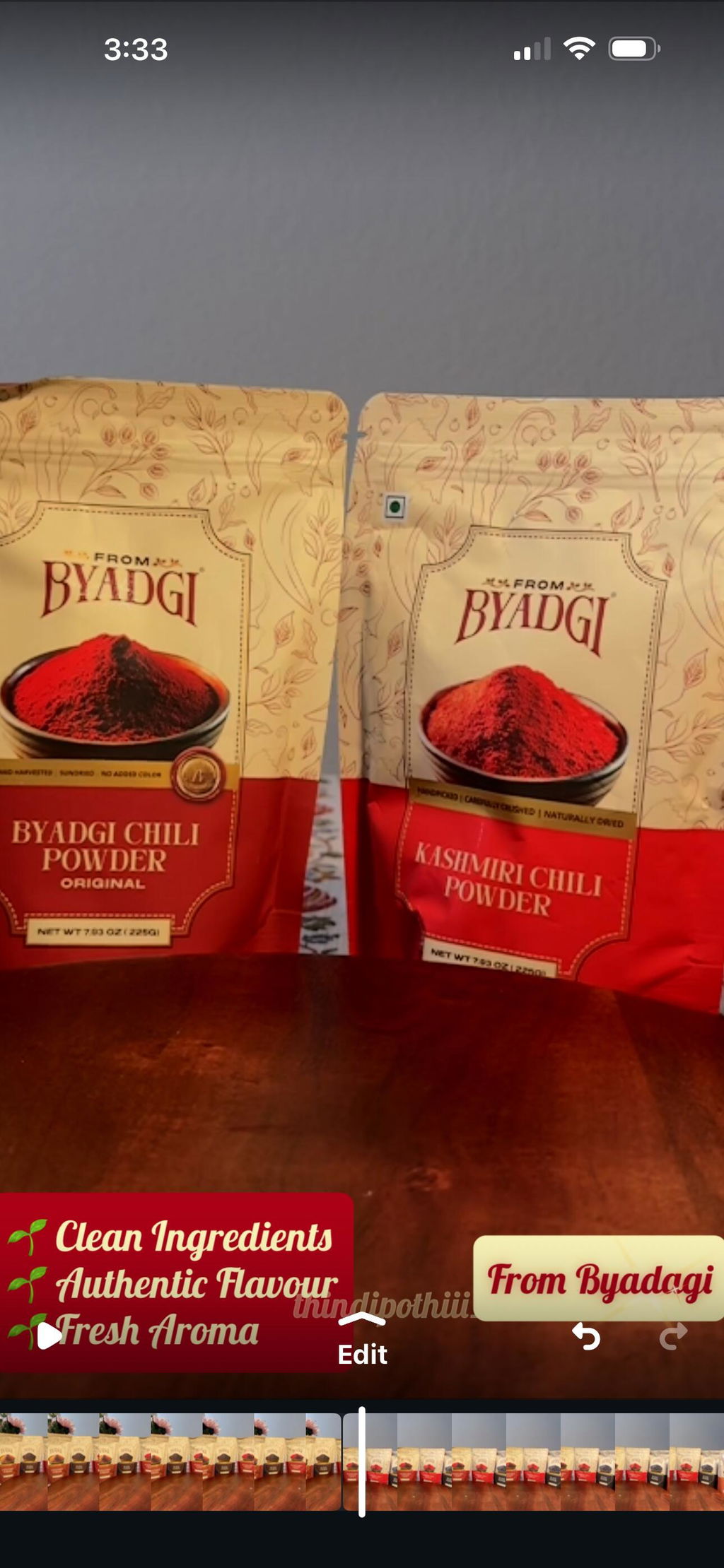
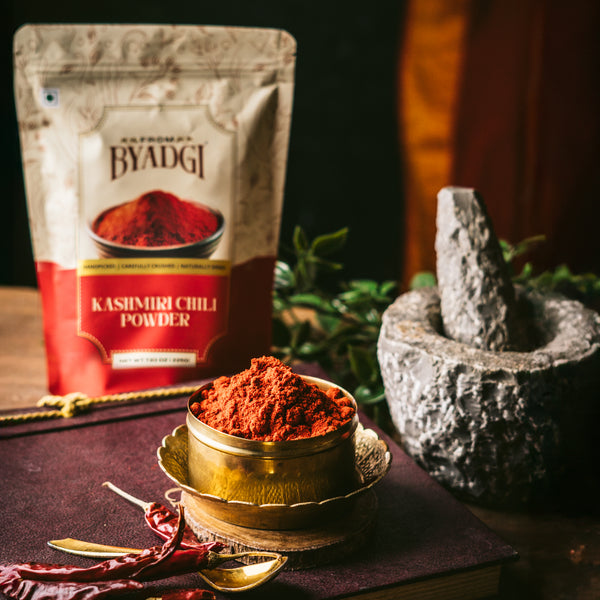
Both are color-first Indian chilies. Byadgi has the deepest red (ASTA 142) and the least heat (11,263 SHU). Kashmiri is a brighter red with a little more warmth (14,070 SHU). Want the mildest option with rich color? Choose Byadgi. Want a bright red with gentle warmth? Choose Kashmiri. Many customers keep both — they shine in different dishes.
We keep our US inventory small and restock it regularly, so your pouch never sits in a warehouse for months. Scan the QR code on your pouch to read the third-party lab reports behind our spices — freshness you can verify, not just claim.