
Heavy metals
✓ PASS



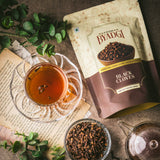
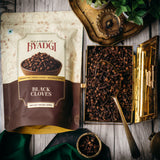



Also known as laung / lavang
Warm, intense, deeply aromatic. Biryani, rice & chai.
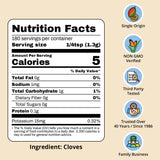
 Third-party lab tested · every batch✓ Same-day shipping on orders by 2 pm PT (Mon–Fri)✓ Free U.S. shipping over $36✓ 30-day money-back guarantee✓ Non-GMO Project Verified
Batch CL004 · Report BARC-26-09-11071 · Tested September 2026
Tested by our NABL-accredited lab partner in India against FSSR 2011 standards. ✓ PASS means the result is within the safe limit. Exact numbers are in the full report.
Read the full report (PDF) →
Simmer 2–3 cloves in the water or milk with ginger and cardamom before adding tea. For clove tea, steep 3–4 cloves in hot water for 5 minutes.
Add 3–4 whole cloves to hot ghee with cardamom, cinnamon and bay leaf before the rice goes in. Push them aside when serving.
Lightly toast cloves with cumin, black peppercorns and cinnamon, then grind. Fresh-ground masala is far more fragrant than store-bought.
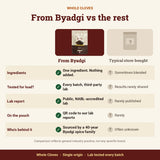
Most cloves on shelves are dry, brittle, and have lost their essential oils. Here's how we're different.
| From Byadgi | Typical store cloves | |
|---|---|---|
| Aroma | Plump, oil-rich buds with strong, sweet aroma | Often dry and brittle, with most of the aroma gone |
| Freshness | Manufacturing date printed on every pouch | Usually only a best-by date |
| Cost | $10.67 per 100 g at regular price, for tested, traceable cloves | Often cheaper per ounce, but with no testing or source shown |
| Lab testing | 105 tests per batch: pesticides, heavy metals, aflatoxins, salmonella, E. coli | Results rarely shared |
| What's inside | One ingredient: whole cloves. Nothing else. | May include broken buds, stems or dust |
| Full transparency | Batch number, manufacturing date and lab report (QR code) on every pouch, from a family 40 years in the trade | Little beyond the label; often unclear who packed it or where |
Grocery store cloves have often been sitting in jars for months — dried out, brittle, and barely fragrant. Fresh, quality whole cloves are plump, oily, and intensely aromatic. You need fewer of them per dish, so the pouch lasts longer than you'd expect.
Our 225g pouch is 4–5× bigger than what boutique spice brands sell. At $10.67 per 100g, you're paying less than half what they charge.
Cloves are the most intense spice in your kitchen — a little goes a very long way. For most dishes: 2–4 cloves for a pot of rice or biryani, 3–5 for a curry serving 4, 2–3 for a cup of chai or mulled wine. Start with less and taste. You can always add more, but you can't take them out once the flavor is in. Fresh cloves like ours are more potent than stale ones, so you may need even fewer.
Add whole cloves early — typically in hot oil or ghee at the start of cooking, alongside other whole spices like cardamom, cinnamon, and bay leaves. This lets them release their essential oils into the fat, which carries the flavor through the entire dish. For drinks like chai or mulled wine, add them to the liquid and let them simmer.
Cloves go into far more than you'd think: garam masala (grind your own), chai tea, mulled wine or cider, biryani, curries, baked ham (stud with whole cloves), pumpkin pie, apple cider, pickles, stewed fruits, and aromatic rice. You can also make clove-infused oil or press a few into an orange for a natural room fragrance.
Warm, sweet, slightly bitter, and almost numbing on the tongue — that's the eugenol, the essential oil that gives cloves their distinctive intensity. They have a deep, penetrating aroma that's sweet and woody at the same time. No other spice tastes quite like cloves — that's why a little goes so far.
Biting into a whole clove is unpleasant — very intense and numbing — but it's not harmful. Most cooks leave whole cloves in the dish for flavor during cooking and either remove them before serving or push them to the side while eating. If you prefer, you can use a spice bag or tea infuser to keep them contained and easy to remove.
Press a clove with your fingernail: a fresh one feels slightly oily and releases a strong, sweet smell right away. If the cloves are brittle, dry and barely fragrant, they've lost most of their essential oil. You can also check the manufacturing date printed on our pouch.
We're a family from Byadgi, Karnataka — with over 40 years in the spice business. Three retail shops, a wholesale network, and end-to-end control from sourcing to delivery. Every batch is hand-selected, third-party lab tested, and Non-GMO verified.
Keep in the original sealed pouch or transfer to an airtight container. Store in a cool, dark place — not above your stove. Whole cloves are one of the most shelf-stable spices: best within 12 months of the manufacturing date printed on the pouch, and stored well they stay potent much longer.
Free shipping on all U.S. orders over $36. Orders placed by 2 pm PT (Mon–Fri) ship the same day, with full tracking.
You're covered by our 30-day money-back guarantee. If the spices don't meet your expectations or arrive damaged, email us and we'll refund or replace them. We're a family business — your trust means everything to us.
 Bestseller
 Bestseller
 Ships free
 Diwali gift